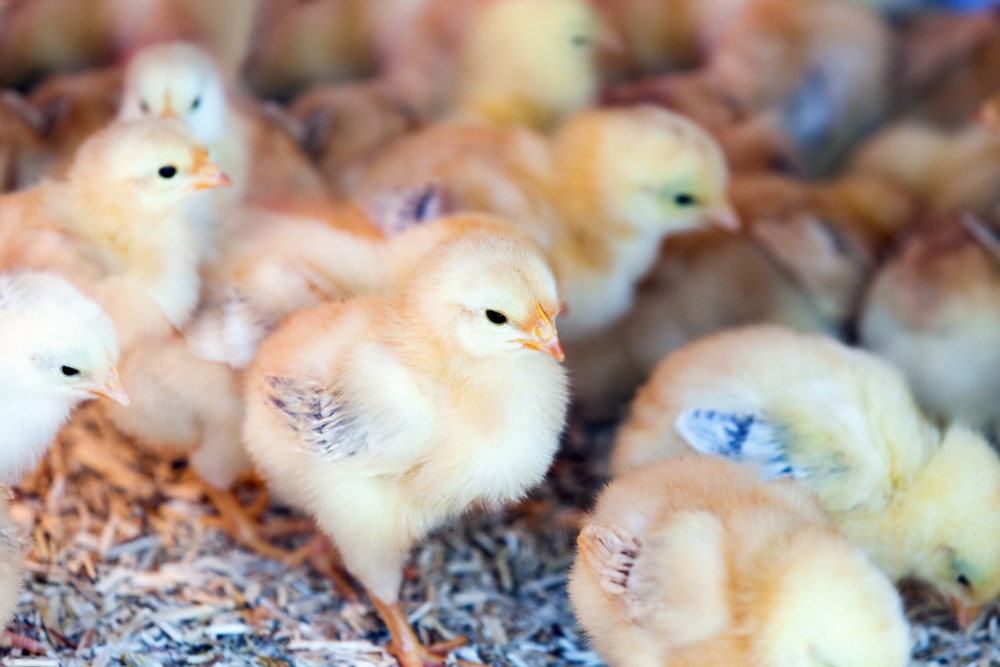
The success of your entire broiler production cycle begins the moment day old chicks arrive at your farm. These tiny, fluffy creatures represent the foundation of your farming operation, and the decisions you make about sourcing them will echo throughout the next 5-6 weeks until market day.
Yet many new farmers approach buying day old broiler chicks with less preparation than they'd give to purchasing a new phone. They focus primarily on price, assuming all chicks are basically the same as long as they're alive and moving. This mindset leads to disappointing results and confusion about why their broiler farming operation isn't meeting expectations.
The reality is that not all day old chicks are created equal. The quality of chicks you receive depends on breeding stock genetics, parent flock health and nutrition, hatchery management practices, vaccination protocols, transportation conditions, and the reliability of your supplier's entire quality chain. Understanding what makes high-quality day old broiler chicks and how to source them consistently is one of the most important skills you'll develop as a broiler farmer.
This comprehensive guide walks you through everything you need to know about day old broiler chicks – from understanding genetics and evaluating quality to choosing suppliers and managing those critical first days after arrival.
Understanding Broiler Genetics: The Foundation of Performance
When you purchase day old broiler chicks, you're not just buying baby chickens. You're buying decades of genetic selection focused on creating birds that grow fast, convert feed efficiently, yield maximum breast meat, and reach market weight quickly.
The major commercial broiler genetics available in South Africa are Ross (particularly the Ross 308 strain), Cobb (especially Cobb 500), and Arbor Acres. Each of these genetic lines has been developed through intensive selection programs by global poultry breeding companies, and all can deliver excellent performance in South African conditions.
Ross 308
This is one of the world's most popular broiler strains, and for good reason. Ross 308 birds are known for excellent feed conversion efficiency, consistent growth rates, good livability, and strong performance across various production systems. They reach market weight efficiently and produce carcasses with good conformation.
Ross genetics work well in South Africa's climate and are widely used throughout South Africa. When you work with established suppliers of broiler chicks in South Africa like Alfa Chicks, Ross 308 is typically available and represents a proven choice for farmers at any scale.
Cobb 500
Cobb 500 is another globally successful broiler strain with particular strengths in feed efficiency and adaptability to different environments. These birds perform well in both intensive and less-intensive production systems, making them suitable for small-scale farmers who may not have perfectly controlled environmental conditions.
Cobb broilers are known for uniform growth, good breast meat yield, and strong leg health. The genetics company provides extensive technical support and management guides, which means farmers working with Cobb 500 have access to excellent educational resources.
Arbor Acres
While less common than Ross or Cobb in South Africa, Arbor Acres broilers are still used by some farmers and have their own performance strengths.
Here's what you need to understand: the differences between these major genetic lines are relatively small compared to the differences caused by management, nutrition, health, and environment. Any of these genetics can perform excellently with good management, and any can underperform with poor management.
More important than which specific genetic line you choose is the quality and consistency of the breeding program and hatchery behind those genetics. This is where your choice of supplier becomes critical.
What Defines Quality in Day Old Broiler Chicks
Walk into any hatchery or supplier facility and you'll see day old chicks – but quality varies dramatically. Understanding what to look for helps you evaluate suppliers and identify potential problems when chicks arrive.
Physical Characteristics of Quality Chicks
Alertness and Activity: Healthy day old chicks should be active, curious, and responsive. When you enter a room of quality chicks, they should move around, peep actively, and investigate their surroundings. Chicks that are lethargic, unresponsive, or sitting hunched up are showing signs of problems.
Uniformity: Look at a group of chicks together. They should be relatively similar in size and development. Significant variation in chick size suggests incubation problems or mixing of different hatch times. Uniform chicks grow more uniformly, which makes management easier and improves marketability.
Clean and Dry: Quality chicks have clean, fluffy down and dry vents (the area under their tail). Wet or soiled vents suggest digestive problems or poor hatchery conditions. The fluff should be soft and full, not matted or sparse.
Bright, Clear Eyes: Eyes should be bright, clear, and fully open. Cloudy, swollen, or partially closed eyes indicate problems.
Healing Navels: The navel (belly button) should be well-healed with no visible openings, redness, or swelling. Poor navel quality often results from incubation problems and predisposes chicks to infections.
Strong Legs: Chicks should stand firmly on strong legs. Weak legs, crooked toes, or inability to stand properly suggest incubation problems or genetic issues.
Appropriate Weight: Day old broiler chicks typically weigh 38-45 grams depending on genetics and parent flock age. Undersized chicks perform poorly throughout their lives. Reliable suppliers consistently deliver appropriately sized chicks.
Behind the Scenes: What You Don't See But Matters Enormously
The quality of day old chicks depends on factors you can't directly evaluate but which reliable suppliers control carefully:
Parent Flock Management: The breeding birds that produce hatching eggs must be properly fed, housed in excellent conditions, kept healthy, and managed to produce quality eggs. Parent flock nutrition directly affects chick quality – deficiencies in vitamins, minerals, or other nutrients impact the developing embryo.
Egg Handling: Hatching eggs must be collected frequently, handled carefully to avoid cracks or contamination, and stored at proper temperature and humidity before setting.
Incubation Precision: Modern hatcheries use sophisticated equipment to control temperature, humidity, and carbon dioxide levels throughout the 21-day incubation period. Small deviations from optimal conditions affect hatch rates, chick quality, and subsequent performance. This requires both quality equipment and skilled technicians.
Hatchery Hygiene: Strict biosecurity and sanitation protocols prevent disease transmission. Reputable hatcheries invest heavily in cleaning, disinfection, and biosecurity measures.
Vaccination and Health Programs: Many quality hatcheries provide chicks that are already vaccinated against major diseases like Newcastle disease, or infectious bronchitis. This is enormously valuable because timing matters with vaccinations, and hatchery vaccination ensures it's done correctly when the chick's immune system is most receptive.
You can't directly observe any of these factors when you pick up your chicks. This is precisely why choosing an established, reputable supplier matters so much. Companies like Alfa Chicks, with decades of experience and reputation to protect, maintain the quality control systems that ensure consistent chick quality.
The Supplier Selection Decision: More Than Just Price
Many new farmers make supplier decisions primarily based on price per chick. This is short-sighted. The cheapest chicks often prove most expensive when you account for performance problems, higher mortality, worse feed conversion, and inconsistent results.
What to Look for in a Chick Supplier
Reputation and Longevity: Suppliers who've been in business for decades (like Alfa Chicks, operating since 1986) have proven their ability to maintain quality and service through various economic conditions, disease challenges, and industry changes. Long-term customer relationships indicate consistent satisfaction.
Geographic Coverage and Delivery Reliability: Can the supplier deliver to your location reliably? Do they have regular delivery routes or will you need to collect chicks yourself? Transportation stress affects chick quality, so reliable, professional delivery matters.
Alfa Chicks, for example, serves an extensive geographic area in South Africa. This coverage means farmers throughout these regions can access quality chicks without excessive transportation time.
Technical Support: The best suppliers don't just sell chicks and disappear. They provide technical advice, troubleshooting help, educational resources, and ongoing support. When you encounter challenges (and you will), having access to experienced advisors who understand your operation makes an enormous difference.
Look for suppliers who host farmer's days, provide educational materials, maintain communication channels for questions, and generally invest in customer success beyond the transaction.
Supply Consistency: Can the supplier reliably provide the numbers you need when you need them? Small or inconsistent suppliers might not have chicks available when you want to start your next cycle, disrupting your business planning.
Product Range: Suppliers who provide not just chicks but also equipment, feed, medications, and other inputs become valuable one-stop partners. This simplifies logistics and ensures compatibility between products.
Vaccination Options: What vaccination programs can the supplier provide? Can they customize based on your needs and local disease risks? Quality suppliers work with poultry health specialists to offer appropriate vaccination protocols.
Problem Resolution: No supplier is perfect 100% of the time. What matters is how they handle problems when they occur. Do they take responsibility? Do they work to make things right? Or do they deflect blame and avoid accountability?
Pricing Considerations: Understanding True Cost
Day old broiler chick prices fluctuate based on various factors including breeding costs, feed prices for parent flocks, disease challenges, seasonal demand, and overall supply/demand dynamics in the market.
When evaluating prices, consider the total picture:
Base Chick Cost: This is what you'll see quoted, but remember it's only part of your true cost.
Vaccination Status: Chicks that come pre-vaccinated cost more per chick but save you money and hassle on vaccinations you'd otherwise need to administer yourself. Factor this into your cost comparison.
Delivery: If delivery is included or available at reasonable cost, this adds significant value compared to suppliers where you must collect chicks yourself.
Performance: This is the hidden cost factor. Chicks that cost R2 less but underperform aren't actually cheaper if they grow slower, convert feed worse, or die at higher rates. Your actual cost per kilogram of chicken produced is what matters, not just the upfront chick cost.
Calculate it this way: If Supplier A's chicks cost R15 each and produce a 2.0 kg bird at slaughter with 10% mortality, you've paid R7.50 per kg of chicken produced (assuming 1,000 chicks: 1,000 x R15 = R15,000; 900 birds x 2.0 kg = 1,800 kg; R15,000/1,800 = R8.33 per kg actually).
If Supplier B's chicks cost R12 each but only produce 1.8 kg birds with 15% mortality, you've paid R7.84 per kg (850 birds x 1.8 kg = 1,530 kg; R12,000/1,530 = R7.84).
Supplier A's "expensive" chicks actually cost less per kg of meat produced because they performed better. This is why quality matters more than upfront price.
Placing Your Order: What You Need to Know
When you're ready to order day old broiler chicks, understanding the process helps ensure smooth transactions.
Advance Planning
Quality suppliers need advance notice to plan breeding, incubation, and hatch schedules. Place orders at least 2-3 weeks ahead of when you need chicks. For larger quantities or specific delivery dates, even more lead time helps.
Delivery Schedules
Most suppliers have regular delivery routes and schedules. Understanding these helps you plan your brooding preparation. Chicks are often delivered on specific days of the week to specific areas.
Minimum Orders
Some suppliers have minimum order quantities, particularly for delivery. If you're starting with small numbers, verify this upfront. Some suppliers accommodate small orders through collective deliveries to multiple farms in an area.
Payment Terms
Understand payment requirements. Many suppliers require deposit or full payment in advance, especially for new customers.
Documentation
Keep records of every order including date, quantity, price, delivery location, and any special requests. This documentation helps with business record-keeping and provides reference for future orders.
Receiving Your Chicks: The Critical Transition
The journey from hatchery to your farm is stressful for chicks. How you handle the arrival and first few hours significantly impacts subsequent performance.
Preparation Before Arrival
Your brooding area must be completely ready before chicks arrive. This means:
- Temperature at target levels (32-35°C at chick level) for at least 24 hours before arrival
- Feeders and drinkers placed and filled
- Lighting operational
- Floors covered with clean litter or paper
- Everything clean and disinfected from previous batches
Never bring chicks onto an unprepared farm. If your setup isn't ready, delay delivery until it is.
Receiving the Chicks
When chicks arrive, inspect the delivery boxes before accepting them. Look for:
- Adequate ventilation in boxes (chicks can suffocate in poorly ventilated containers)
- Chicks that are active and alert
- Minimal dead-on-arrival (DOA) chicks (some DOA is normal; more than 1-2% suggests problems)
Count chicks and verify the number matches your order. Most suppliers include a small overage to account for normal losses.
Unboxing and Placement
Handle boxes carefully during unboxing. Release chicks gently into the brooding area, spreading them out rather than dumping them in one spot.
Monitor closely for the first few hours. Are chicks finding feed and water? Are they moving around or huddling? Their behavior tells you whether temperature and setup are right.
The First 48 Hours: Setting Your Flock Up for Success
The first two days are absolutely critical. Chicks that get off to a good start outperform throughout their entire lives. Those that experience stress or go hungry/thirsty during these crucial hours never fully catch up.
Temperature Management
Watch chick behavior to determine if temperature is right. Properly warmed chicks spread out comfortably around the heat source. Chicks huddled tightly under heat are too cold. Chicks moving away from heat toward cooler areas are too warm.
Don't just rely on thermometers – learn to read your chicks' behavior.
Feed Availability
Chicks need to start eating quickly. Their first feed should be easily accessible and visible. Many successful farmers cover 50-75% of floor space with paper or flat surfaces holding small amounts of starter feed during the first 2-3 days. This ensures every chick can find feed easily.
As a general guide, plan for about 1 feeder space per 30-40 chicks and gradually transition to your regular feeding system over the first week.
Water Access
Clean, fresh water must be available immediately. Check water levels constantly during the first few days. Chicks dehydrate quickly, and even short periods without water cause permanent performance losses.
For the first day or two, consider adding water-soluble vitamins or electrolytes to help chicks recover from transportation stress. Products like those available from poultry health specialists at Super Agri Science and Diag and Bupo Animal Health provide essential nutrients during this transition.
Activity Encouragement
Gentle encouragement helps chicks learn to eat and drink. Walking slowly through your chicks several times in the first hours causes them to move around, explore, and discover feed and water. Some farmers gently dip chick beaks in water to teach drinking.
Observation
During the first 48 hours, you should be checking your chicks frequently – every 2-3 hours minimum, including at night. Watch for:
- Activity level and distribution around the brooding area
- Feed and water consumption
- Droppings (should be brown and fairly firm)
- Respiratory sounds (chirping is normal; wheezing or rattling is not)
- Any signs of injury or weakness
Early detection of problems allows early intervention, dramatically improving outcomes.
Common First-Week Challenges and Solutions
Even with quality day old broiler chicks from reliable suppliers, challenges can occur. Being prepared helps you respond effectively.
Temperature Issues
Signs: Chicks huddling (too cold) or panting (too hot)
Solution: Adjust heating immediately. Create temperature gradients so chicks can self-regulate by moving to their comfort zone.
Dehydration
Signs: Lethargic chicks, sunken eyes, dry skin
Solution: Ensure water is available and accessible. Add electrolytes to water. In severe cases, dip beaks in water to teach drinking.
Weak Chicks
Signs: Some chicks unable to stand, sitting hunched, not eating
Solution: Separate weak chicks to a "hospital" area with easily accessible feed/water and optimal temperature. Some chicks recover; others don't. This is why quality suppliers with low weak-chick percentages matter.
Respiratory Symptoms
Signs: Wheezing, coughing, nasal discharge
Solution: Check ventilation immediately. Respiratory problems often result from poor air quality. If symptoms persist or worsen, consult with poultry health specialists.
Digestive Upsets
Signs: Watery droppings, pasty vents
Solution: Review feed and water quality. Ensure temperature is correct. Some digestive upset is normal in the first few days, but severe or prolonged problems require investigation.
Working with Alfa Chicks: Quality Day Old Broiler Chicks in South Africa
When sourcing day old broiler chicks in South Africa, Alfa Chicks represents a supplier that understands the importance of quality, consistency, and farmer support.
Since 1986, Alfa Chicks has built its reputation on delivering reliable quality to farmers ranging from small backyard operations to larger commercial producers. This longevity in South Africa's competitive and challenging poultry industry speaks to their commitment to quality and service.
What makes Alfa Chicks a valuable partner for farmers seeking broiler chicks in South Africa includes:
Quality Genetics: Access to proven broiler strains (Ross 308 and other quality genetics) that perform consistently in South African conditions.
Geographic Coverage: Extensive delivery throughout all major provinces within South Africa. This coverage means farmers throughout a vast region can access quality chicks without excessive transportation time.
Complete Supply: Beyond day old chicks, Alfa Chicks supplies equipment, medications, vaccines, cleaning products, and other essentials. This one-stop approach simplifies farm management and ensures product compatibility.
Technical Support: Educational resources, farmer's days, and ongoing technical advice help customers succeed. The company understands that their success depends on farmer success, creating alignment of interests.
Vaccination Options: Flexible vaccination programs that can be customized based on farmer needs and local disease pressures.
Established Relationships: Many Alfa Chicks customers have been with them for years, some even for generations. This loyalty reflects consistent quality and service. When farmers keep coming back cycle after cycle, that tells you something important about their experience.
Understanding of Scale: Whether you're ordering 100 chicks or 2,000, Alfa Chicks serves farmers at all scales. The company was founded with a mission to ensure even small farmers have access to the same quality genetics as large operations.
Integrating Quality Inputs: Feed and Health Products
While day old chicks are the foundation of your broiler operation, they're only one component of success. Quality feed and health products are equally important.
Nutrition: The feed you provide determines how well your birds can express their genetic potential. Even the best genetics can't overcome poor nutrition. Working with reputable feed suppliers who formulate specifically for broiler nutrition ensures your birds get appropriate protein, energy, vitamins, and minerals at each life stage. Meadow Feeds is a supplier of high quality feeds and one that we recommend. (https://www.meadowfeeds.co.za/)
Bitek offers scientifically formulated soap and disinfectant products designed to support optimal conditions for chicken housing and cleanliness. Combining quality day old chicks with proper nutrition and clean environments, creates the foundation for profitable broiler production.
Health Management: Preventive health care through proper vaccination, good biosecurity, and access to quality medications when needed protects your investment in quality chicks.
Super Agri Science and Diag and Bupo Animal Health provides comprehensive poultry health products and expertise. From vaccines to vitamins to disease treatments, having access to quality health products backed by technical support helps ensure your chicks perform to their potential.
The True Cost of Cheap Chicks: A Cautionary Tale
It's worth addressing directly the temptation to cut costs by purchasing cheap day old chicks from questionable sources.
Many farmers have learned this lesson the hard way: poor quality chicks are never a bargain. When you buy cheap chicks that perform poorly, you still invest the same time, feed, labor, and infrastructure as you would for quality chicks. You just get worse results.
Consider a real-world example: A farmer saved R3 per chick by using a questionable supplier – R3,000 savings on 1,000 chicks. But:
- Mortality was 18% instead of the 5% they'd experienced with quality chicks
- Birds grew 15% slower, requiring extra days to reach market weight
- Feed conversion was worse, requiring more feed per kg of gain
- Final weights were less uniform, reducing marketability
By the time this farmer calculated total costs per kilogram of chicken produced and accounted for lost revenue from higher mortality and lower prices for undersized birds, those "cheap" chicks cost them significantly more than quality chicks from a reputable supplier would have.
The lesson: evaluate chick suppliers based on total cost of production per kilogram of chicken, not just upfront chick price. Quality inputs from reliable suppliers like Alfa Chicks pay for themselves through better performance.
Questions to Ask Before Placing Your First Order
When you're ready to order day old broiler chicks, use these questions to evaluate suppliers and clarify terms:
About the Chicks
- What genetics do you supply? (Ross, Cobb, etc.)
- What is the typical hatch date to delivery timeframe?
- What vaccinations are included or available?
- What is your typical mortality rate in the first week?
- What is the average chick weight at delivery?
About Service
- What is your delivery schedule to my area?
- What is your minimum order quantity?
- How far in advance should I place orders?
- What support do you provide after delivery?
- Can you provide references from other farmers?
About Terms
- What are your payment terms?
- What is your policy if chicks arrive with problems?
- Do you offer any guarantees?
- What documentation do you provide with deliveries?
About Your Operation
- What do you recommend for someone at my scale?
- What are the most common mistakes you see new farmers make?
- What resources do you provide to help ensure success?
Reputable suppliers welcome these questions and provide clear, confident answers. Vague responses or unwillingness to discuss these topics should raise red flags.
Your Path Forward: Starting Strong
The quality of day old broiler chicks you source sets the ceiling for your operation's performance. Everything else you do – feed, environment, management – works within the limits of what those genetics can deliver.
Choose wisely. Work with established suppliers who have proven their commitment to quality and farmer success. Alfa Chicks' decades of service to farmers throughout South Africa and represents exactly the kind of reliable partnership that successful broiler farmers need.
Don't let the desire to save a few rand per chick compromise your entire operation. Quality day old broiler chicks from suppliers like Alfa Chicks, combined with proper cleaning and disinfectant supplies from partners like Bitek and health products from specialists like Super Agri Science, Diag and Bupo Animal Health create the foundation for profitable broiler farming.
Your journey to successful broiler production begins with a simple phone call or message to reliable suppliers. Take that step today, and set yourself up for success from day one.
Related Guides
- The Ultimate Guide to Starting Broiler Farming in South Africa
- Broiler Chicken Management: Your Complete Day 1 to Market Day Guide
- Where to Buy Quality Broiler Chicks in South Africa: A Comprehensive Farmer's Guide
Alfa Chicks has been supplying trusted stock to farmers since 1986. Contact us to place an order, check availability, or get product information.
Call: 012 561 1205 / 087 985 0603
WhatsApp: Available
Email: [email protected]
Contact us: https://alfachicks.co.za/contact


